Artículo escrito Carlos Jonay Suárez, cofundador y responsable de estrategia digital en Pueblos Remotos.
Sí, hoy voy a empezar a redactar este blog post con una de esas preguntas que, seguramente, me harían arquear una ceja si la leyera en un post ‘ajeno.’
Lo es, porque ‘clamar’ en voz alta títulos como estos, no es baladí y es que decir que [rellena con cualquier tema] es el futuro de [rellena con otro tema] siempre te puede llevar a un ‘barro’ del que es muy difícil salir.
Así que, para no meterme de lleno en ese ‘barro’, voy a tirar de algunos artículos, además de mi experiencia con Pueblos Remotos, para intentar argumentar lo máximo posible las respuestas a las preguntas que te irás encontrando aquí debajo.
¿Por qué nos preocupamos primero?
Si queremos responder, al menos en parte, a algo tan complejo como ¿Es el trabajo remoto el futuro del mundo rural?, creo que lo primero que es pertinente, es analizar por qué tenemos que preocuparnos primero.
Dentro de la pregunta tenemos dos temas, que al menos en España, tienen grandes retos por delante: el trabajo remoto y su implantación en las empresas, versus, el mundo rural y su preocupante despoblación desde los años sesenta, o setenta.
El teletrabajo
Si nos centramos en el primero y analizamos su evolución, podemos ver datos que no son nada positivos, al menos en estos momentos. Si bien es cierto que la pandemia provocada por la COVID-19, consiguió algunos avances en este sentido: un nueva ley de teletrabajo, la ‘ley startup’ o publicaciones, hasta la saciedad, en defensa, o en contra, del teletrabajo, lo cierto es que en términos absolutos y en datos de la EPA (Encuesta de Población Activa) el número de asalariados que trabajan desde su domicilio (se ve que si trabajas desde otro sitio, no eres ‘teletrabajador’) ha disminuido, en términos absolutos, desde el segundo trimestre de 2022, tal y como podemos ver en el gráfico elaborado por Eva Rimbau.

Gráfico elaborado por Eva Rimbau
Por otro lado, si bien es cierto que en términos absolutos podemos ver una reducción evidente: pasamos de más del 15% de personas asalariadas que teletrabajan más de la mitad de los días, a un 10%. También es cierto que los mismos datos del año 2019, pre pandemia, oscilaban entre el 4,1% o el 8,3%, según la fuente estadística que consultemos. Por lo tanto y aunque el porcentaje no sea muy elevado, podemos afirmar que el teletrabajo no solo se ha mantenido, si no que ha crecido si lo comparamos con años previos al COVID-19.
A estos datos se suman unas cuestiones culturales, y coyunturales, que afectan de forma directa, como son la ‘cultura del presencialismo’, muy arraigada en España, una evidente falta de formación para dirigir equipos en remoto (esto traspasa, también, nuestras fronteras) y una legislación que no ayuda demasiado a que las empresas que quieren llevarlo a cabo, lo hagan con ciertas garantías.
Además, los perfiles profesionales en los que más está impactando el ‘efecto del teletrabajo’ (también con sus formatos híbridos) son aquellos relacionados con el mundo del desarrollo de software, la ingeniería informática o el marketing digital, campos que cuentan, además, con un gran número de trabajadores autónomos.
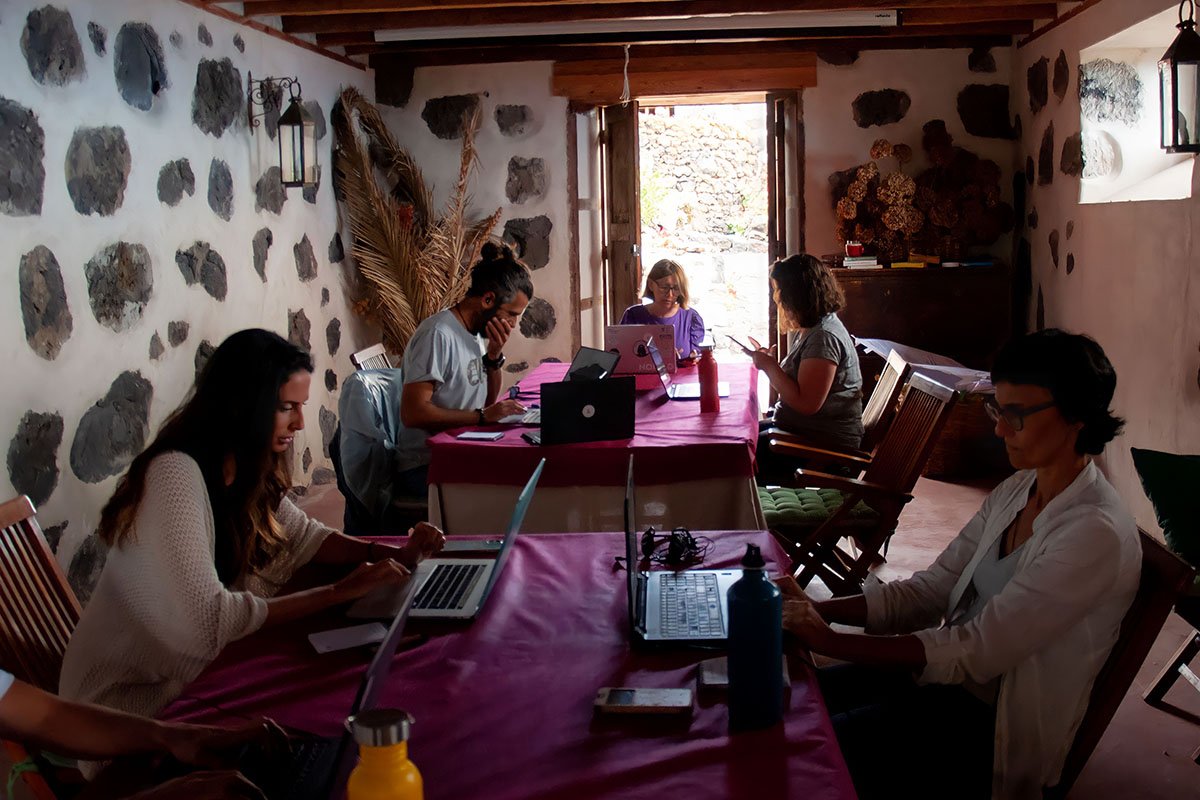
Teletrabajadores en nuestro ‘coworking rural’ de Fuencaliente
En resumen, el teletrabajo sufrió un ‘pico’ de crecimiento desmesurado en España (llegando a alcanzar a más del 20% de la población activa durante el tercer trimestre de 2020), pero el mismo fue solo un reflejo de una emergencia momentánea por la situación de pandemia y no el asentamiento de unas bases sólidas para su implementación en el mercado laboral. No obstante, cada vez son más las empresas, sobre todo dentro del sector digital, que se suman a esta tendencia y le permiten teletrabajar a sus empleados desde cualquier rincón de España.
Así, con una situación de ‘incertidumbre’ que aún está presente en el panorama, resulta muy complicado tomar decisiones, o que muchas personas se planteen irse a vivir a entornos rurales, sobre todo hasta aquellos que están más alejados de las grandes urbes como Madrid, o Barcelona.
El mundo rural
Dentro del mundo rural no estamos exentos de problemas, o preocupaciones. A la despoblación, sobre todo de personas jóvenes, que vienen sufriendo desde principios de los años sesenta, hay que sumar otra ‘larga lista’ de necesidades y retos a cubrir, sobre todo en aquellos núcleos de menos de 10.000 habitantes.
Es una realidad, que podemos leer en artículos como: Yo no me voy: estos emprendedores te cuentan por qué trabajan desde sus pueblos, del blog de Almanatura, en el que vemos como muchas personas se han replanteado volver a su pueblo natal y se han decidido por irse de la ciudad en busca de una mejor calidad de vida.
La tranquilidad, salir de entornos urbanos masificados o el coste de vida, suelen ser principios que ayudan a asumir un mayor ‘aislamiento`, o la falta de determinados servicios.
Esa búsqueda de conexión con la naturaleza y de entornos más pequeños, es algo que conocemos bien en Pueblos Remotos y que nos cuentan todas las personas que participan en nuestras experiencias.
Además, si leemos otros artículos como Los pueblos aplauden el auge del teletrabajo, podemos ver datos y porcentajes procedentes de consultoras como ManpowerGroup, Hays o Adecco Group Institute, en los que se reflejan estos movimientos hasta áreas rurales, o pueblos cercanos a las grandes ciudades.
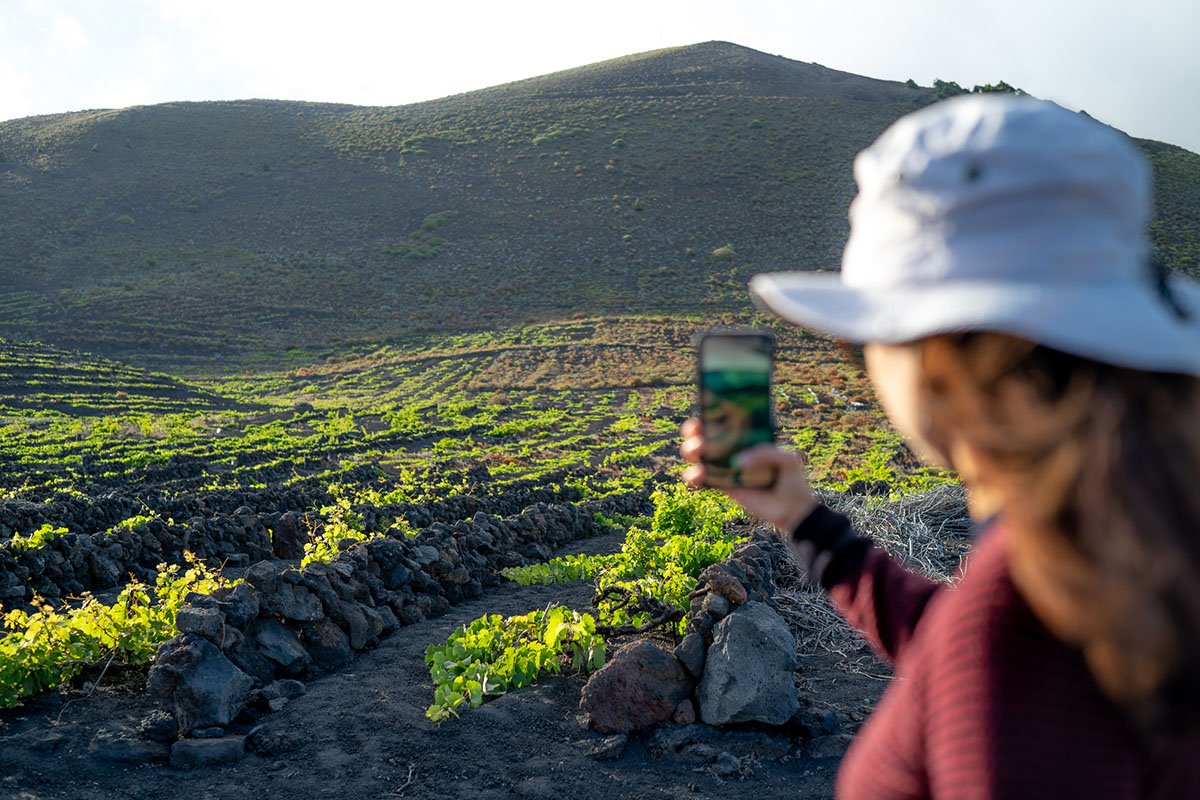
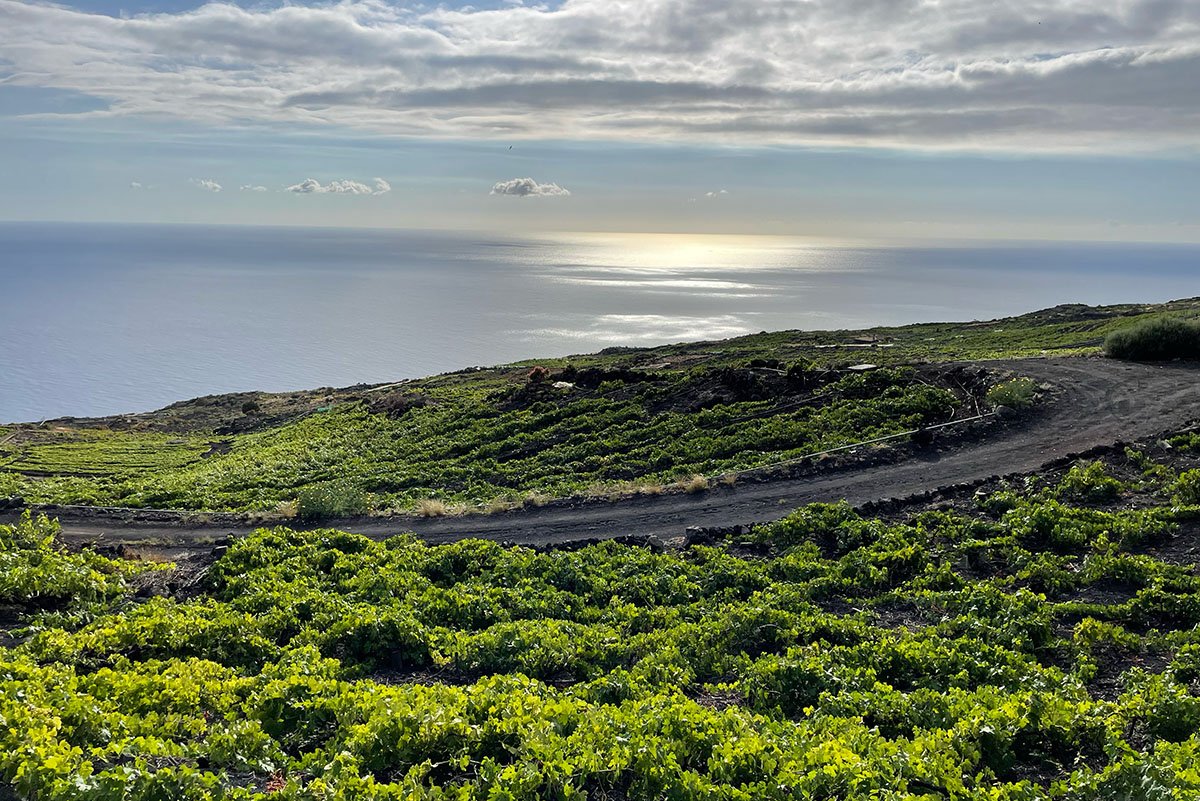
Elsa Rodríguez, cofundadora de Pueblos Remotos, captando un paisaje del mundo rural (foto de Van Marty)
Por otro lado, también hay una ‘Cara B’, hay otros artículos que defienden que ese supuesto impacto migratorio desde las grandes ciudades a los pueblos, no se ha producido: El ‘gran retorno’ a los pueblos desde las ciudades por la pandemia era un mito
Dentro del artículo analizan, en base a un estudio publicado en Esade EcPol, que los flujos migratorios desde las grandes urbes a los pueblos rurales (ellos los consideran pueblos rurales si están por debajo de los 10.000 habitantes) no se han modificado entre el año 2019 y el año 2020.
Los datos que exponen son muy claros, pero también es cierto, que el año 2020 fue un año de alta incertidumbre, y aunque muchas personas se desplazaron a segundas residencias, volvieron a sus pueblos natales o, directamente, se mudaron a un pueblo rural, también es cierto que, sobre todo los dos primeros grupos, no tuvieron porque modificar su dirección de residencia en la ciudad.
Por otro lado, las restricciones municipales, que en muchos casos se extendieron en el tiempo a lo largo del año 2020, también limitaron que se produjera una ‘mudanza total’ hacía los pueblos, unido a que la situación de incertidumbre sobre el mantenimiento permanente del teletrabajo se mantuvo hasta bien entrado el año 2021.
Resumiendo, la movilidad hacía los pueblos rurales supone un esfuerzo, así como tomar una serie de consideraciones importantes, como pueden llegar a ser la falta de servicios esenciales, o la calidad de la conectividad para realizar el teletrabajo. Sin embargo, son muchos los proyectos e iniciativas, tanto públicas como privadas, que se han puesto en marcha para generar un ‘efecto llamada’ (o un ‘efecto retención’) en sus territorios, permitiendo que muchas personas estén ‘sirviendo’ como pioneros del teletrabajo dentro de los entornos rurales.
Movimientos como Rooral, Pandora Hub, The Social Circle o Bikonsulting, son algunos de ellos. Unidos a otros proyectos, colivings y coworkings, como Sende, El Refugio o La Grulla Coworking.
Entonces, ¿Es el trabajo remoto el futuro del mundo rural?
Bajo mi opinión (aquí me meto ya de lleno en el barro) el trabajo remoto es uno de los futuros (como bien dice David Alayón, hay más de un escenario de futuro) del mundo rural.
¿Por qué? Pues por una amplia variedad de cosas, pero te dejo por aquí una lista de cosecha propia con algunas de las que considero más relevantes:
-
Las mejoras en infraestructuras, acompañadas de una extensión, e implantación, cada vez mayor de fibra óptica, están facilitando que trabajar en remoto desde entornos rurales no sea un quebradero de cabeza (como ejemplo real, puedo decir que en el municipio de Fuencaliente de La Palma, menos de 2.000 habitantes, contábamos con una conexión a internet de 200 megas simétricos)
-
La toma de conciencia de muchas empresas, y de sus responsables, de adoptar el trabajo remoto, están consiguiendo que se generen empresas distribuidas por todo el territorio nacional, ejemplos que pueden animar a otras empresas a seguirles.
-
La retención de talento, sobre todo en determinados sectores, va más aparejada con el ‘salario emocional’ que con el ‘salario real’, por lo que muchas personas están comenzando a elegir el ‘Work From Anywhere’ por encima del ‘Pay Me More’. Tenemos un ejemplo muy claro dentro del mercado americano: La Gran Renuncia: en EEUU los empleados están dejando en masa sus trabajos, la gran pregunta es si veremos esto (y cuándo) en España
-
Algunas personas están eligiendo ‘calidad de vida’ en contra de ‘vivir en la ciudad’, me refiero con calidad de vida a poder estar en un entorno más tranquilo, más conectado con la naturaleza y con unas dimensiones más amigables para conocer el lugar y a las personas que viven en él. Algunos ejemplos de estas historias los puedes escuchar, o leer, dentro de Emprender en el pueblo
Por supuesto, aún nos queda muchísimo camino por andar, miles de restos por delante y un montón de situaciones complejas que no tienen una respuesta clara. Pero ese es, probablemente, uno de los retos más bonitos que podremos vivir en los próximos años.
En un mundo que está cada vez más devastado por el cambio climático, más desconectado de la naturaleza (y más conectado al metaverso) y con un acuciante aumento de problemas de salud mental ¿No puede ser la vuelta al mundo rural y nuestra reconexión con él, una de las posibles ‘recetas’?