Article written by Elsa Rodríguez (co-founder of Pueblos Remotos and project manager)
When we first started developing the idea for Pueblos Remotos (Pueblos Remotos), even before the name itself was born, we already knew that identifying and solving challenges would be key elements in our value proposition. In fact, for those who haven't heard us tell the story yet (we repeat ourselves a lot!), it all began during a lunch conversation one ordinary day when we started discussing the depopulation of rural Spain.

When we returned to the coworking space where we usually work, Carlos started drawing our "mind-mapping " on the windows. This crazy idea consisted of doing a diagnostic analysis of the current situation in rural Canary Islands, which in many cases differs from that of mainland Spain and other parts of Europe.
Here on the islands, the isolation of the villages isn't so pronounced, since you can be in a town with all the services you need in just 15 minutes by car. And while that's not the main problem, we do believe that one of the main reasons why people don't start businesses in rural areas is the multitude of challenges they face when trying to launch a business.
Starting a business in rural areas is a challenge in itself
Feelings of loneliness, a lack of knowledge about how to carry out their idea, or a lack of capacity and resources to improve their projects are some of the problems that small entrepreneurs and business owners with whom we normally work in rural environments mention most frequently.
In those initial conversations, we're always struck by their immense passion for what they do and how fiercely they defend it. They want to keep fighting, but often the daily grind overwhelms them. Furthermore, we frequently get the impression that they don't feel supported by their community or by others in the same situation; they often tell us that "everyone in town is out for themselves .
In this world marked by individualism, why would we expect a small, remote village to be any different? I'm not saying they all are, but there are many cases where, even though people have known their neighbors for years, they don't know how they are doing or how their businesses are faring. We sometimes idealize the idea that in smaller communities everyone helps and benefits each other, but the reality we've seen so far isn't quite so idyllic.
Needs analysis, a preliminary step to setting challenges
Once we have identified and selected, based on our criteria, the town where an edition will take place and the main local actors who will be part of it, we begin to co-create with them what would be the 3 weeks that a "freelance" .

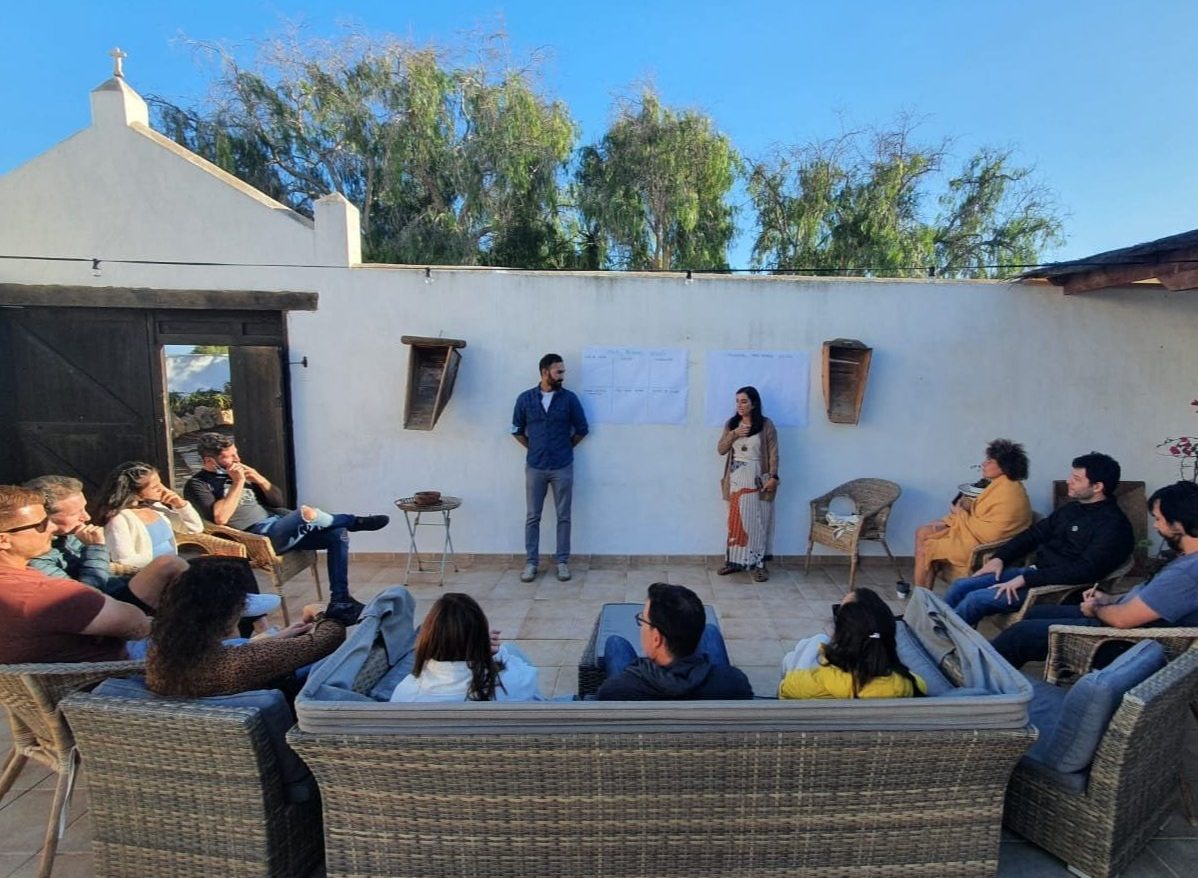
Co-creation session with local actors for the Fuencaliente Remoto edition
Apart from defining the activity that each of the local actors will lead and establishing the schedule with many other secondary activities, another fundamental pillar that we emphasize is the analysis of needs that they consider to be the most important.
Together, we conduct a brainstorming where participants share what they would like to improve, the barriers they encounter, and what they want to focus on. From this analysis, the challenges to be posed for the remote workers to solve are selected. In the Antigua edition, for example, the remote workers themselves participated in the needs analysis, which facilitated understanding of the projects and fostered their involvement.
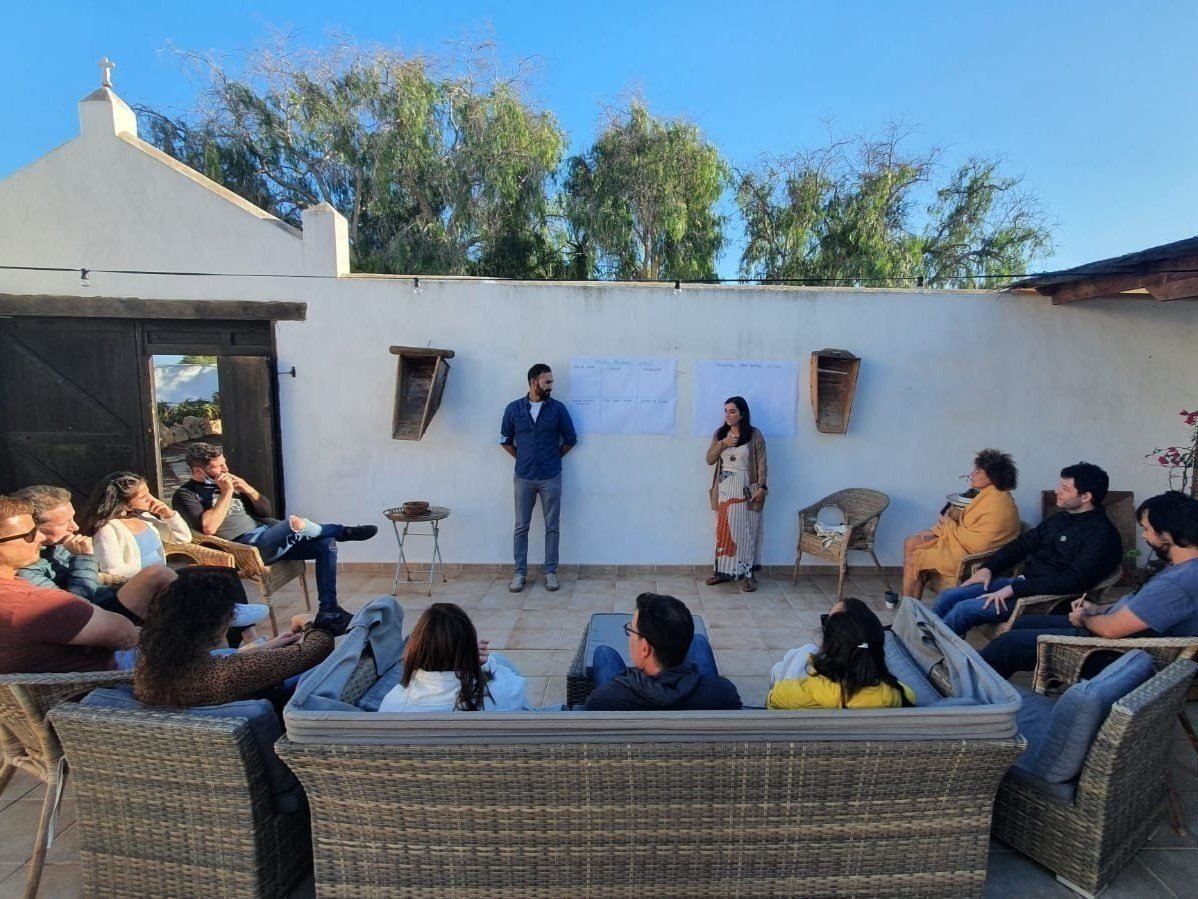
Needs analysis session with teleworkers and local stakeholders during the Antigua Remoto event
An average of 3 challenges are typically selected for each local actor, and these can be of two types:
-
Technical services: more related to digital, management, or planning needs. Some examples include: website improvements, designing a marketing plan or content calendar, brainstorming, and prioritizing objectives for the next year. Workshops are also offered to local stakeholders on the use of social media and various tools.

Sesión de trabajo para resolver el reto de mejorar la página web del Hotel Rural La Era de La Corte. Fotografía de Yeray Cabrera.
-
Practical: These involve more physical tasks. For example, in Icod Remoto, some teleworkers got their hands dirty planting vines with Victor from the Cámbium winery and sowed crops with Toñi from Finca La Costa, and in Antigua Remoto they made soaps by hand with Tere from Vidaloe and also helped in the permaculture garden with Aurora from Verdeaurora.
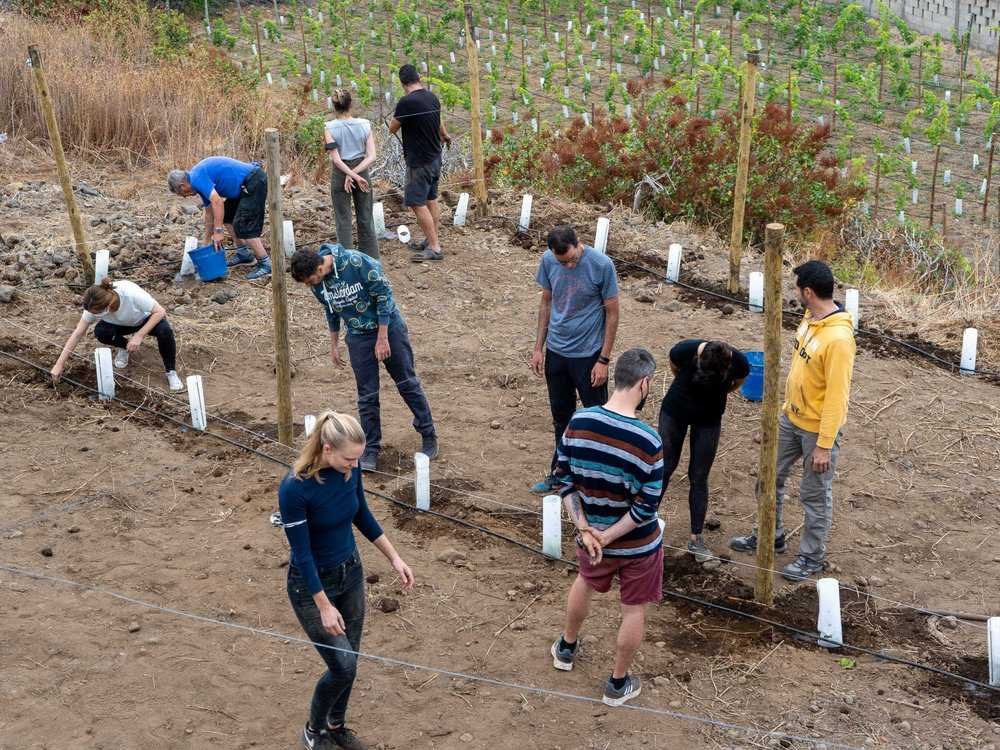
Planting vines with Victor from Bodega Cámdium during Icod Remoto
How are teleworkers getting involved in solving challenges?
In the initial registration form, one of the filters we have is that people who want to participate in our experiences must be willing to dedicate 2-3 hours a week to collaborating with local projects. During the interviews, which are the second step in the application process, many people ask us how this involvement with local stakeholders is carried out.
We don't force anyone to collaborate with a particular actor; rather, it arises naturally based on each person's interests and the rapport they feel with the rural entrepreneurs. Nor do we require them to help on a specific day and time; on the contrary, we give them complete freedom to organize themselves according to their own availability and that of the actor in question.
In the "guest posts" already published on this blog you can find examples of how some of the teleworkers have been involved, as well as the perspective from the point of view of local actors:

Javi López
In " Investing in anecdotes: living a few weeks in a remote village ," he tells us how he got involved with the kids at The Animal Academy, teaching them how to use tools like Notion, SquareSpace, Paycomet, and Stripe.

Malole Rodriguez
In his article " Connected Rurality: you have to live it to understand it ", he explains how some of the teleworkers helped them to create a new version of the website for the rural hotel La Era de la Corte and how they remained involved two months after the experience ended.

Gonzalo Fernández
Two weeks ago, she spoke to us about "what comes after experiencing remote work ," and how she became involved with the participants during Antigua Remoto and continues to be involved with them and with us in Pueblos Remotos. For example, by giving talks on productivity to the community.
The effectiveness of the challenges exceeds expectations
We're often asked about the results and whether the challenges are being met. The reality is that, out of approximately 18 challenges initially identified, we typically find twice as many solutions. In other words, when remote workers become involved in the day-to-day operations of the local stakeholders, they identify other areas for improvement and suggest them as well.
What's the best part of all this? Not only do local businesses improve, but thanks to the challenges and the design of the experience itself, connections are forged that extend far beyond those 21 days. In just one year, we've seen remote workers return to visit local businesses, and the businesses themselves continue to collaborate, because together we've broken down the barrier of facing the world alone, as they begin to form part of a group they can rely on.
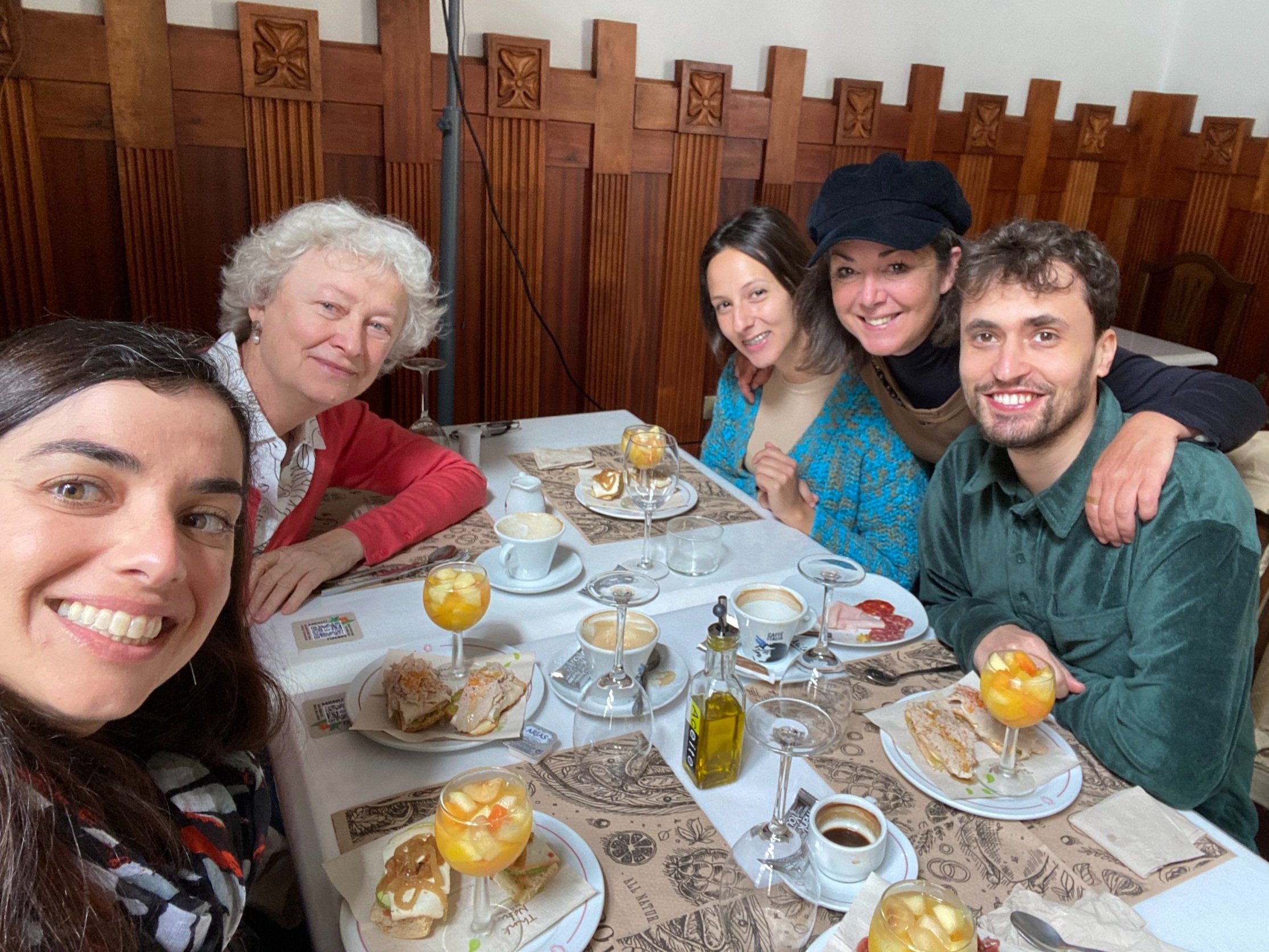
Recent reunion with some of the participants and local actors of Icod Remoto
One of the things we've realized is that we have a lot of audiovisual material of the activities but almost nothing of the challenges, so in the next editions we will try to immortalize those moments as well so that we can share them with all of you, the community that follows us.
In short, I hope that this article makes it a little clearer why we consider challenges to be a fundamental piece for the magic of Connected Rurality , and that they are part of both the values we want to convey and our value proposition.