You might remember an experience we did in December with young people in Garachico . Yes, that experience we did for the first time as a "test run," in which 10 students from the ULL (University of La Laguna) boarded a large bus (guagua is what we call a bus in the Canary Islands) on their way to Garachico to solve local challenges.
Well, it turned out that this "test" was a complete success, and so we decided to replicate it.
However, although we stayed on the lower island, this time the destination of our super bus was towards El Tanque, specifically to San José de los Llanos, where 10 new students from the ULL joined the adventure of solving challenges of the rural sector, to bring young people closer to it (hence the name of the title, it turned out well, didn't it?🤪).
We returned from this incredible experience a couple of weeks ago, and so, after having processed what these days were like, I want to tell you in detail what we were missing in this place so far from the city.
Young people are the future, let's not forget that
First, I want you to meet the main characters of this adventure, who are the 10 students from the University of La Laguna who boarded that bus to contribute and learn about the reality of the rural sector:
-
Kawther Benaboura
-
Kevin Andrés Torrico Fuentes
-
Alexei Schustek García
-
Andrea Pérez Orribo
-
Alicia Morales
-
Ana González Jiménez
-
Salomé Toledo García
-
Raquel González Perera
-
Nerea Herrera González
-
Diego Borja Arteaga
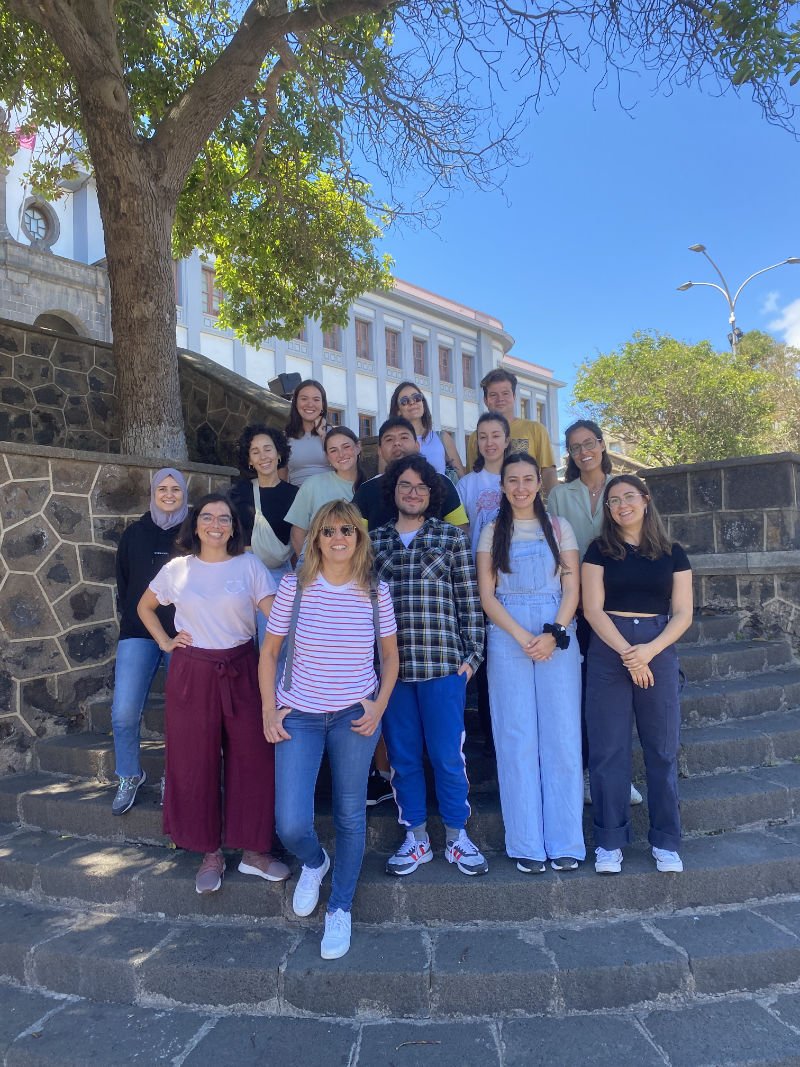
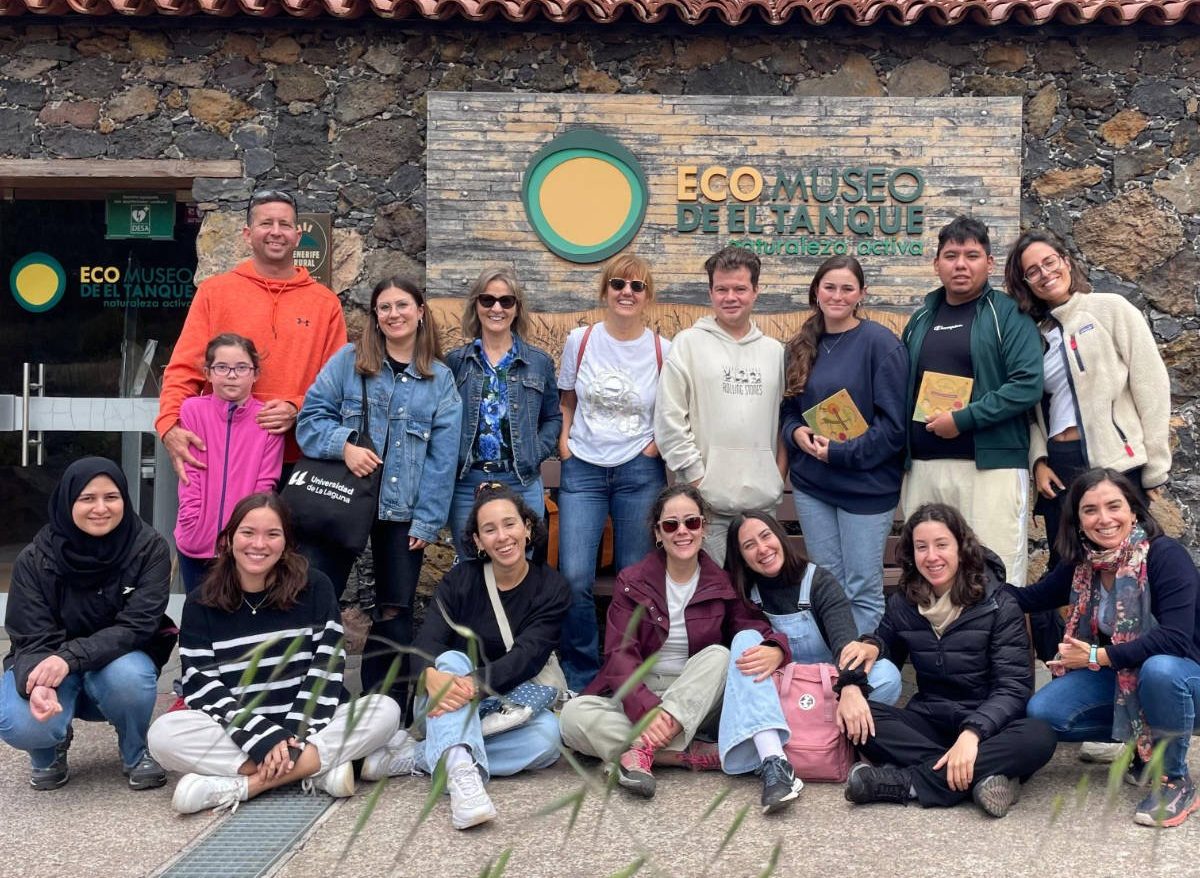
The 10 students from ULL, together with the Pueblos Remotos team and Inés Ruiz, director of the Secretariat of Internships and Employability of the Vice-Rectorate for Students
Students of different ages, faculties and experiences, eager to contribute and learn, who after the 5 days that PR ULL – El Tanque 2024 , became a great team.
And I think I speak for the entire Pueblos Remotos team when I say it has been a true honor to work with them.
San José de los Llanos, a rural village in El Tanque
As I mentioned earlier, all this happened in the small rural town of San José de los Llanos, belonging to the municipality of El Tanque.

View of Mount Teide from San José de los Llanos
To give you an idea of the context of this place, San José de los Llanos has fewer than 600 inhabitants, and most of its population works in agriculture or livestock farming. It's also worth noting that the population has a very small percentage of young people, most of whom choose to look for work in other parts of the island.
PR ULL – The Tank 2024
The PR ULL – El Tanque 2024 experience took place over 5 days, between June 5th and June 9th. Five days of hard work but also fun, learning, and connection with the environment and people.
The objective of this experience was to propose solutions to 3 challenges from 3 different local entrepreneurs, whose common thread was: How to reinvent traditional rural businesses to attract young talent?
To do this, the students divided into 3 teams, to work separately with each of the local businesses.
The students started from this key question, and had to carry out a preliminary phase of research and empathy to obtain a specific challenge to work on according to the needs of each entrepreneur.
The 3 challenges that the students ultimately faced were:
-
How to increase the profit margin of the José González Meneses Cheese Factory? A challenge that the team made up of Salomé, Diego and Nerea worked on.
-
How to develop a communication strategy that requires the least possible effort from the owners of the Arte-Sano bakery? Developed by the team formed by Alicia, Kevin, Ana and Raquel.
-
How to maintain a stable occupancy rate year-round at the San José de los Llanos Hostel? A project by Kawther, Andrea, and Alex's team.
To achieve this, they followed a methodology called Design Thinking , which was entirely new to most of them. The methodology consists of a process aimed at solving challenges and conceptualizing ideas. Originally a five-phase process, for the purposes of this experiment, we condensed the methodology into three stages:
-
Empathize (with entrepreneurs and the territory)
-
Ideate (think of ideas to solve each of the challenges)
-
Prototype (create a model or prototype of the selected idea)
We were surprised by how quickly the teams grasped the dynamics of the process, although I must say that it is much easier said than done.
During the 5 days, we combined work with activities and outings to get to know the environment and each of the entrepreneurs and the challenges they were working on.
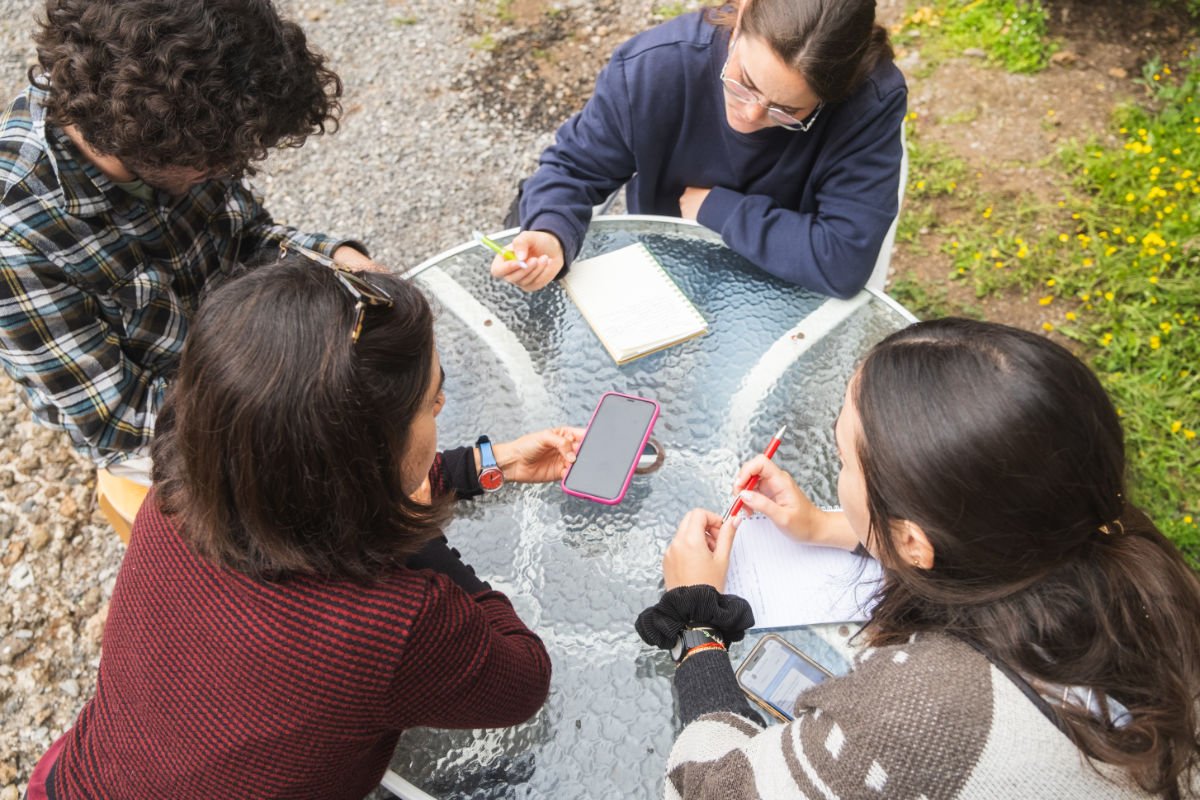
The Quesería team working on Phase 1
Isaac, Yajaira and José, the local entrepreneurs
Unlike the PR ULL – Garachico experience, where we worked on challenges about the territory, and the entrepreneurs we had acted as collaborators, on this occasion, the entrepreneurs were the center of the challenges (as you may have seen above).
Each team empathized with one of the local businesses, devised solutions to address the challenge they had identified, and prototyped a solution to it.
The entrepreneurs we had with us on this occasion, who promoted the challenges the students worked on, were:
-
José González Meneses Cheese Factory , a family-run cheese factory headed by José González. José gave us the opportunity to taste his cheese and, most importantly, to visit his factory, where he explained in great detail the cheesemaking process and the main challenges and difficulties he faces daily in his industry and environment.
-
The Arte-Sano bakery , a family project led by Yajaira, was a real treat. We also had the pleasure of visiting their bakery, where Yajaira and her family kindly told us about the different types of bread they make and their meticulous production process. We even got to taste their bread, and wow! It was incredible.
-
The San José de Los Llanos Hostel , run by Isaac. This was the youth hostel where we stayed for the 5 days of the experience, giving the students the opportunity to learn about the business and its owners in depth.
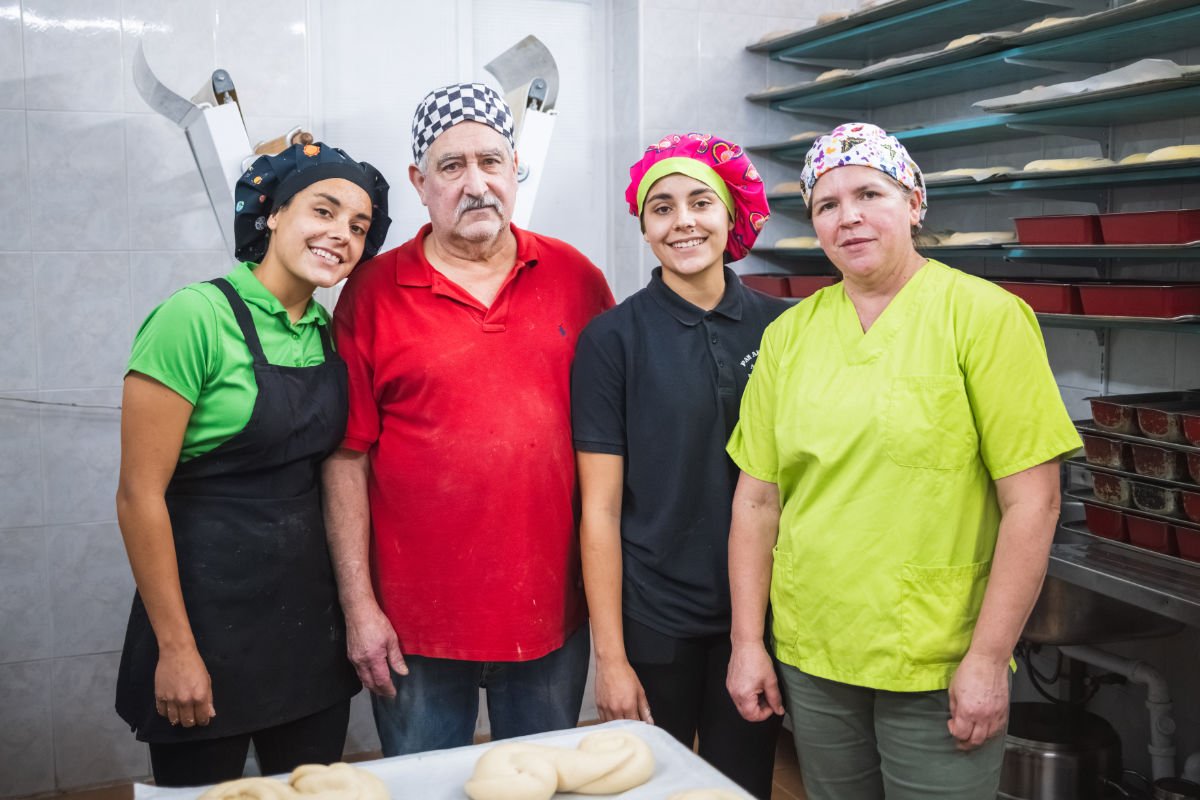
Yajaira and her family from the Arte-Sano bread bakery
Thanks to José, Yajaira and Isaac for opening the doors of their businesses to us and allowing us to work with them.
Solutions to the challenges
As we have been telling you throughout this article, the main objective of this experience was to provide impactful solutions to the challenges of local entrepreneurs.
To this end, the 3 student teams finished the 5 days of experience with an idea and a prototype, which they presented in front of Inés Ruiz, director of the Secretariat of Internships and Employability of the Vice-Rectorate of Students, and some of the local entrepreneurs.

The Hostel team after presenting their solution to Isaac
The 3 solutions that the students ended up with were:
-
How to increase the profit margin of the José González Meneses Cheese Factory? The team focused on finding a solution that would help diversify the cheese factory's income. To achieve this, they devised a series of tasting experiences, allowing the cheesemaker to showcase his product at different events, thus generating extra revenue, as well as brand recognition and exposure.
-
How to develop a communication strategy that requires the least possible effort from the owners of the Arte-Sano Bakery?: For this challenge, the team developed a communication kit for the vendors, in which they perfectly defined the packaging that the products should have, so that they would speak for themselves, along with a very detailed guide about the brand and its products, which also connects with the company's social networks.
-
How to maintain stable occupancy year-round at the San José de los Llanos Hostel? The students who formed this team chose to focus on identifying key collaborations, aiming to attract the hostel's target audience and meet its needs to accommodate these guests. To achieve this, they proposed working with volunteers from platforms like Workaway or Backpackers who could handle aspects that Isaac doesn't manage, along with a series of collaborations with educational institutions so their students could complete service-learning at the hostel.
Conclusions and next steps
This experience, just like the first edition, has been a great learning opportunity for all of us.
On the one hand, we as Pueblos Remotos have had the opportunity once again to get closer to young talent and help them to devise these solutions and accompany them in the process, but also to learn from them.
For the students, it has been an experience in which they have been able to learn firsthand about the reality of the rural sector, unknown to many of them, and in which they have learned about how to work on a challenge from scratch, with a team they did not know before.
We are very proud of the result of this second edition, and although we do not know for sure what the future holds, we can assure you that we will work to continue uniting entrepreneurs, young people and the environment.
I hope these words have made you reflect on the potential of young people and rural environments, and for my part I can only thank Elsa, Ane, Carlos and Lara for joining me in this experience and letting me be part of Remote Villages once again.
A hug!